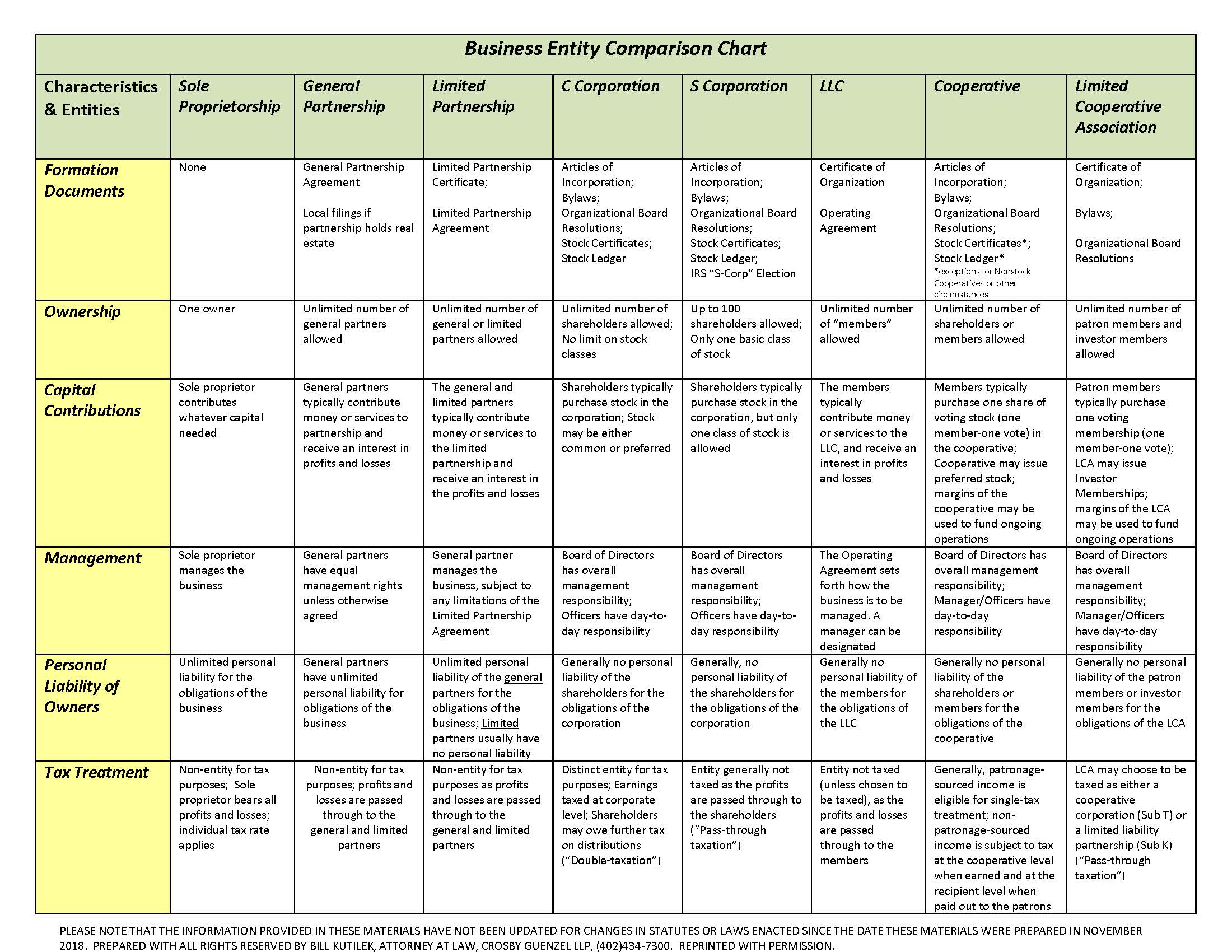
NCDC encourages the engagement of legal counsel and an accounting professional to guide this process. The steering team and future board of directors should know which questions to ask to ensure that the cooperative is legally structured, that legal procedures are followed as the cooperative begins operations and policy decisions are made.
What is a Cooperative Legal Considerations - Handout
Organizing committee members should become acquainted with the legal aspects of cooperatives by studying laws applicable to them and businesses generally. Every State has one or more laws authorizing the formation of cooperative corporations, although a number of them are restricted to agricultural producers. Copies may be obtained from an attorney, the Secretary of State, or the State Corporation Commissioner.
Legal Papers: Perhaps the most important process, other than determining the business's feasibility, is drafting articles of incorporation and bylaws. Other legal documents include: Membership application, Membership or stock certificate, Revolving fund certificate, Marketing/purchasing agreements, & Meeting notices and waivers of notice
Several Federal laws are especially important for cooperatives. The Capper-Volstead Act of 1922, sometimes called the "Magna Charta" of farmer marketing cooperatives, recognizes the rights of producers to act together in handling, processing, and marketing their production without violating antitrust law. Producers may also form marketing agencies in common. But even though cooperatives have this organizational protection, their operations are subject to the same antitrust laws as other businesses.
The Farm Credit Act of 1971 defines a cooperative that is eligible to borrow from the banks for cooperatives in the Farm Credit System and the conditions the cooperative must meet. The National Consumer Cooperative Bank Act created a similar financial institution, the National Cooperative Bank, to serve nonfarm cooperatives. The Internal Revenue Code describes the tax treatment of cooperatives and their patrons and tax reporting requirements.
1) Articles of Incorporation
Incorporation is usually the best method of organizing. Each State has special enabling laws under which cooperatives may incorporate. It may be preferable to incorporate under the State's general corporation enabling act, but structure bylaws to operate as a cooperative. Incorporation gives the cooperative a distinct legal standing. Members generally are not personally liable for the debts of an incorporated organization beyond the amount of their investment. The articles indicate the nature of the cooperative business. The articles should specify a rather broad operating authority when incorporating, even though services may be limited at the beginning.
These articles usually contain:
- Name of the cooperative
- Principal place of business
- Purposes & powers of the association
- Proposed duration of the association
- Name and street address (must be located in Nebraska) of the registered office and agent
- Names and addresses of the incorporators (Nebraska law requires ten incorporators for stock cooperatives)
- Information about the capital structure
- Information on the distribution of assets upon dissolution
In Nebraska, filing the articles of incorporation with the Secretary of State activates the cooperative corporation. After the organizing committee approves the articles, the attorney files for the corporation charter and includes the recording fees. Once chartered by the State, the cooperative should promptly adopt bylaws.
_________________________________________________________________________
2) Bylaws
State how the cooperative will conduct business, and it must be consistent with both State statutes and the articles of incorporation. The committee prepares the articles and bylaws with the help of an attorney so that provisions comply with the laws of the State in which the cooperative is incorporated. The committee's role is also to ensure the bylaw provisions will not conflict with operating procedures.
Bylaws usually have:
| Bylaws usually have:
|
Also covered is how the board is structured to represent the membership, given the geographical distribution and size of the membership and the scope of business and function of the cooperative. Directors may be selected to represent districts based on membership density, to reflect commodities or services to be handled, or on some other basis that provides equitable representation. The organizing committee's recommended management structure should include the basis for director representation, voting methods, and board officers, and their terms.
For marketing cooperatives that lack a marketing agreement, the bylaws specify the extent of members' obligation to market through the cooperative. They outline the terms and conditions under which the products will be marketed and the accounting procedures.
3) Nebraska Banking and Finance Cooperative Exemption
Under Nebraska law, a cooperative’s activities of soliciting for sale and selling its stock and memberships may be exempt from the registration and other requirements of the Nebraska Securities Act, provided that the cooperative first files the appropriate notice and related documents with the Nebraska Department of Banking and Finance. Once an exemption is established at the state level and as long as the cooperative’s activities fall within an exemption from the federal securities laws, the cooperative is ready to solicit members.
_________________________________________________________________________________________________________
4) Membership Application
The application, signed by the member and approved by the board of directors, is the legal proof that a patron is a member. A cooperative should have a completed membership application on file for every member. Membership and the amount of business done with members and nonmembers are important factors for certain antitrust and taxation provisions.
This form has five main parts:
- Applicant's statement asking to become a member of the cooperative
- Signature of the applicant
- Statement of cooperative acceptance of the applicant
- Signatures of the president and the secretary
- Statement of the duty and intent of the member
A membership certificate may be issued to each member as evidence of entitlement to all of the rights, benefits, and privileges of the association.
_________________________________________________________________________________________________________
5) Marketing and Purchasing Agreements
An agreement ensures sufficient control over products or services to be delivered so the cooperative can function. This is especially helpful in the first few years of operation when the cooperative is establishing its reputation as a responsible and successful business. Marketing and purchasing agreements have helped some cooperatives get the needed outside financial help. In some cases, cooperatives that use contractual agreements must file them with the State Government.
In the marketing agreement, the association agrees to:
- Accept specified products of stated or better quality
- Market them to the best of its ability
- Return to members all marketing proceeds less deductions for expenses & continuing capital needs
- A similar contract with members can be structured for service and supply cooperatives.
This continuing or self-renewing agreement should specify that after it has been in force for some initial period, it should continue indefinitely unless the member (or the cooperative) states in writing a desire to cancel or modify it. A cancellation request must be made during a specified annual period as noted in the contract.
_________________________________________________________________________________________________________
6) Revolving Fund Certificates
When a cooperative retains funds from business with or for patrons as capital investments, it issues a written patronage refund certificate or a similar document to the member as a receipt for capital investments that will eventually be revolved or redeemed. Meanwhile, the retain is used to finance the business. Member investments may be deductions based on per-unit of product handled or services used, reinvested patronage refunds, or original capital subscriptions (if a nonstock cooperative).
_________________________________________________________________________________________________________
7) Charter Member Meeting
According to most statutes under which cooperatives are organized, articles and bylaws must be adopted by a majority vote of the members or stockholders. For convenience in organizing, only the persons named in the articles of incorporation, called the charter members, must vote to adopt the bylaws. These persons are regarded as members, or stockholders, as soon as the articles of incorporation are filed. A good practice, however, is to invite everyone who has signed a pre-membership agreement to the meeting to ratify the bylaws.
A temporary presiding officer conducts this first meeting and reports that the articles of incorporation, have been filed. A draft of the proposed bylaws is presented, discussed, and adopted as read or amended. Further action is usually needed to accept those members or stockholders who have subscribed for stock or agreed to become members but are not named in the articles of Incorporation. Under some statutes, however, the incorporators can adopt the bylaws as incorporators rather than as members or stockholders. If members of the first board of directors have not been named in the articles of incorporation, they should be elected at this meeting.
Here are some suggestions for selecting the first board of directors:
- Use a nominating committee to develop a panel of candidates for the board
- Select only members as candidates
- Nominate two candidates for each position
- Vote by secret ballot
Sources:
Securities Act of Nebraska - Chapter 8, Article 11
Raising Small Business Capital in Nebraska Through Securities Sale
CIR 7 How to Start a Cooperative
CIR 62 Cooperative Directors: Asking Necessary Questions
Starting a Cooperative Handout