Definition of a Cooperative
A cooperative is an association of persons (organization) that is owned and controlled by the people to meet their common economic, social, and/or cultural needs and aspirations through a jointly-owned and democratically controlled business (enterprise). The people of the cooperative are those who use its products, supplies, and/or services. Profits are also often returned to the members of the cooperative; however, cooperatives are often more focused on services for members than on return on investment.
Cooperatives can be created for several different reasons or to fulfill several different needs: jointly process goods, split costs, split control over work, purchasing power (bulk buys), shared employees, shared wages, etc.
How is a Cooperative Different
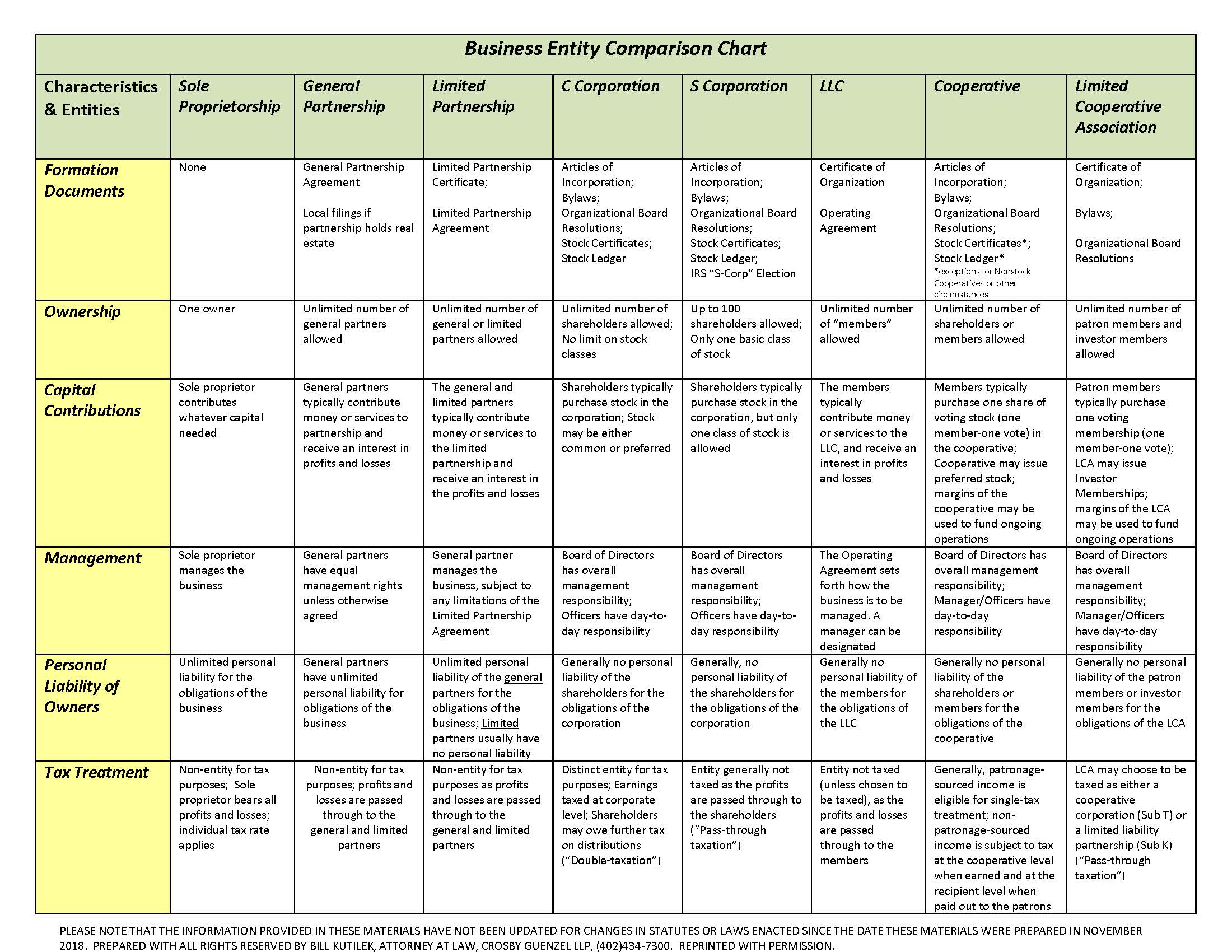
While any type of business can be a cooperative, corporations and cooperatives differ primarily in ownership, purpose, and control: Corporations are owned by shareholders seeking return on investment (profit maximization), while cooperatives are owned by members who use their services (user benefit). Corporations use voting based on share count, whereas cooperatives operate on a democratic "one member, one vote" principle.
Key Differences:
- Ownership & Control: In a corporation, shareholders with more shares have more control. In a cooperative, control is distributed equally among members regardless of their investment size, generally following a one-member, one-vote rule.
- Purpose & Profit: Corporations exist to maximize profit for shareholders. Cooperatives exist to serve members' needs, with surplus revenue (profit) returned to members as "patronage dividends" based on their usage of the business rather than capital invested.
Governance: Both have boards of directors, but corporate boards are loyal to shareholder value, while cooperative boards are elected by members to represent their interests. - Taxation: Both can face taxes, but cooperatives may avoid double taxation on income returned to members as patronage dividends, which is a major financial advantage.
- Examples: Corporations include publicly traded entities like Apple or Walmart. Cooperatives include credit unions, agricultural co-ops (e.g., Ocean Spray), and consumer-owned utilities.
When to Choose Which:
Corporation: Best for raising large amounts of capital from outside investors, allowing for rapid expansion and centralized control by major shareholders.
Cooperative: Best for groups seeking to solve a common need (e.g., shared services, collective marketing) where member democracy and local control are prioritized over external investment.
Principles of a Cooperative
Cooperatives around the world generally operate according to the same core principles and values, adopted by the International Co-operative Alliance in 1995. Cooperatives trace the roots of these principles to the first modern cooperative founded in Rochdale, England, in 1844.
1) Voluntary and Open Membership: Cooperatives are voluntary organizations, open to all persons able to use their services and willing to accept the responsibilities and meet the requirements of membership, without gender, social, racial, political, or religious discrimination. Members control the co-op's policies and make decisions for the cooperative.
2) Democratic Member Control: Cooperatives are democratic organizations controlled by their members, who actively participate in setting their policies and making decisions.
3) Member Economic Participation: Members contribute equitably to, and democratically control, the capital of their cooperative.
4) Autonomy and Independence: Cooperatives are autonomous, self-help organizations controlled by their members.
5) Education, Training, and Information: Cooperatives provide education and training for their members, elected representatives, managers, and employees so they can contribute to the development of their cooperatives. They inform the general public about the nature and benefits of cooperatives.
6) Cooperation among Cooperatives: Cooperatives serve their members most effectively and strengthen the cooperative movement by working together through local, national, regional, and international structures.
7) Concern for Community: Cooperatives work for the sustainable development of their communities through policies approved by their members.